
If you want to understand where the digital sports trading industry is heading, you first have to look at how drastically we have changed the way we watch television.
A decade ago, watching a massive international cricket match was an entirely passive experience. You sat on your couch, you watched the screen, and you listened to the commentators. If you wanted to place a wager, you had to call a local bookie or navigate a painfully slow, dial-up-era website that looked like a Microsoft Excel spreadsheet.
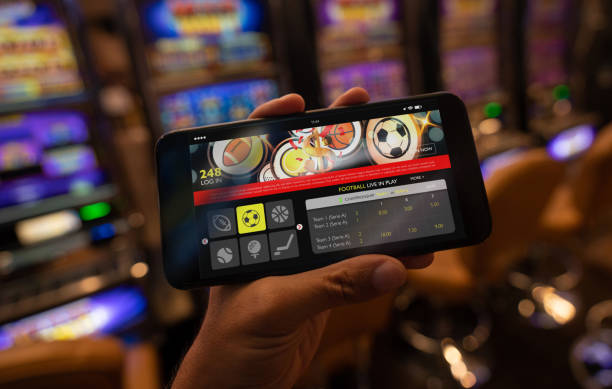
Today, the idea of just “watching” a game feels almost boring to the modern sports enthusiast. We have entered the era of the “second screen.” When a crucial T20 match is on the television, the viewer’s eyes are constantly darting down to the smartphone in their hand. That smartphone is no longer just a communication device; it is a high-speed, dynamic financial terminal.
Platforms like 99exch have completely revolutionized the viewer experience by turning passive fans into active, real-time market participants. But the technology we are using today is just the tip of the iceberg. The architects behind these digital exchanges are already building the infrastructure for the next five years.
What does the future hold for the dedicated cricket trader? We are moving away from simple web browsers and stepping into an era of hyper-personalization, zero-latency streaming, and frictionless biometrics. Let us pull back the curtain and look at the definitive trends that will shape the future of the platform.
Trend 1: The Eradication of the Latency Gap
The biggest enemy of any live sports trader is latency. If you are watching a live stream or a cable broadcast of a cricket match, what you are seeing is an illusion of “live” action. Due to satellite broadcasting regulations, encoding, and transmission times, the image on your television screen is actually happening anywhere from seven to fifteen seconds after it occurred in the stadium.
In a fast-paced T20 match, fifteen seconds is an eternity. A wicket can fall, the umpires can signal a no-ball, or a boundary can be struck while your television is still showing the bowler running up to the crease.
The immediate future of the 99 exchange infrastructure is focused entirely on eradicating this gap. We are rapidly approaching a reality where the data feed on your trading dashboard is synchronized directly with the umpires’ on-field technology and stadium APIs.
In the future, the platform’s live graphical scorecard will be so blazingly fast that traders will actually abandon their television screens during the crucial final overs of a match. They will rely entirely on the digital dashboard because it will be the only way to get the true, millisecond-accurate mathematical state of the game. For the in-play trader, this zero-latency data will be the ultimate competitive advantage.
Trend 2: The Death of the Generic Dashboard
Right now, when one hundred different people log into a digital sports exchange, they all see the exact same homepage. They see the same list of upcoming soccer matches, the same tennis tournaments, and the same cricket leagues.
The future of user interface (UI) design is hyper-personalization powered by behavioral algorithms. In the next few years, your trading dashboard will become completely unique to you.
Imagine you are a trader who specializes exclusively in the first six overs of the Indian Premier League. You never bet on Test matches, you never look at international One Day Internationals, and you certainly don’t care about greyhound racing. In the future, the system will learn your habits within your first week. When you execute your 99exch login, the platform will dynamically reconstruct itself before your eyes.
It will push the IPL powerplay markets to the very top center of your screen. It will automatically hide the sports you ignore, decluttering your visual space. It will remember that your standard stake is ₹500 and will pre-populate the betting slips for you, saving you crucial seconds when you need to lock in a fast-moving price. This transition from a generic “one-size-fits-all” website to a highly intelligent, customized trading terminal will drastically reduce screen fatigue and improve trader efficiency.
Trend 3: Haptic Feedback and the Sensory Trading Experience
Trading live sports requires intense visual concentration. You have to watch the match, monitor the fluctuating blue and pink odds boxes, and keep an eye on your account balance simultaneously. But what if you didn’t have to look at the screen to know what the market was doing?
The next major trend in mobile trading applications is the integration of advanced haptic feedback. We are moving toward a sensory trading experience.
Imagine having your phone in your pocket while you are cooking dinner, with a live match running in the background. Suddenly, your phone delivers three short, sharp vibrations. The app’s haptic engine has been programmed by you to signal whenever a specific team’s odds drop below a certain threshold. Without even looking at the screen, you know exactly what the market is doing.
If a major market suspension occurs (such as a wicket falling or a DRS review being taken), the phone could deliver a long, heavy vibration. This tactile integration means that to actively play 99 exch, you will no longer need to be glued to a monitor. The platform will communicate with you physically, allowing you to react to market shifts instantly, no matter what else you are doing in your daily life.
Trend 4: Frictionless Biometric Security
The single most frustrating part of the current digital ecosystem is account security. We all know we need complex passwords to protect our funds, but typing out a chaotic string of uppercase letters, numbers, and symbols while a live match is rapidly unfolding is incredibly stressful. Furthermore, temporary account lockouts due to forgotten passwords cost traders millions of dollars in missed opportunities every year.
The password is dying. The future of access is entirely biometric.
Within the next few development cycles, typing out your credentials will feel like using a rotary telephone. The my99exch infrastructure will integrate directly with the secure enclaves of modern smartphones. To access your trading dashboard, you will simply look at your phone’s camera (Face ID) or rest your thumb on the screen (Ultrasonic Fingerprint).
This military-grade biometric integration achieves two massive goals simultaneously. First, it makes unauthorized access virtually impossible, as a hacker cannot steal or replicate your physical biometrics remotely. Second, it reduces the login time from fifteen seconds of frantic typing down to zero point five seconds. You open the app, it sees your face, and you are instantly staring at the live odds.
Trend 5: Voice-Activated Execution
This sounds like science fiction, but the API architecture for it is already being built. As smart home devices and advanced mobile voice assistants become deeply integrated into our lives, the sports exchange will inevitably follow suit.
Imagine a scenario where you are driving home from work. You have the cricket commentary playing on the car radio. You hear that the star opening batsman has just been injured and is limping off the field. You know the odds are going to shift violently in the next ten seconds, but you are behind the wheel and cannot safely open the application.
In the future, you will simply say, “Hey System, lay the batting team for one thousand rupees at current market price.”
The voice-recognition software, tied securely to your biometric vocal print, will instantly parse the command, connect to the exchange API, and execute the trade before the next batter even walks down the pavilion steps. Hands-free, voice-activated market execution will completely change the dynamic of live trading, capturing value in situations that were previously impossible to trade.
Conclusion
The evolution of the digital cricket market is not just about offering more matches or slightly better odds. It is about fundamentally changing the relationship between the human user and the digital interface.
The platform of tomorrow will not be a passive website that you visit; it will be an intelligent, highly personalized financial companion. By eradicating data latency, customizing the visual dashboard to your exact habits, integrating physical haptic alerts, and moving toward frictionless biometric security, the industry is building a world where the barrier between your sports knowledge and market execution is completely removed. For those who take the time to adapt to these coming trends, the future of online sports trading will be faster, safer, and infinitely more profitable.
